Publications
Research and Innovation in 3D Concrete Printing
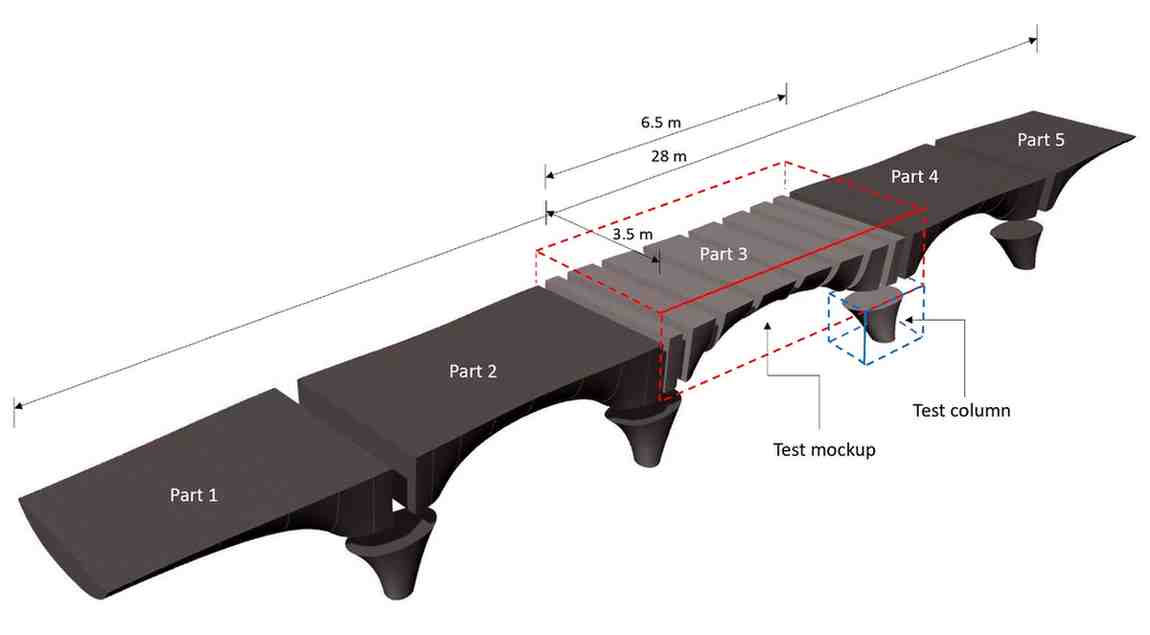
A Framework for Large-Scale Structural Applications of 3D Printed Concrete: the Case of a 29 m Bridge in the Netherlands.
Zeeshan Y. Ahmed, Rob J.M. Wolfs,, Freek P. Bos, Theo A.M. Salet
Eindhoven University of Technology | Open Conference Proceedings | 2022
In this work, a framework for large-scale structural applications of 3D printed concrete is presented. The steps in this framework, consisting of a design phase, testing phase and manufactur-ing phase, towards a final output were presented and discussed theoretically. The framework was then applied to the case of a 29 m 3D printed bridge, constructed in the Netherlands. The full application of the framework illustrates that despite the absence of standards, it is possible to safely apply 3D printed structures in practice. With the gradual increase of testing data expected to become available over the coming years, the extent of the application of the framework can be reduced step-by-step.
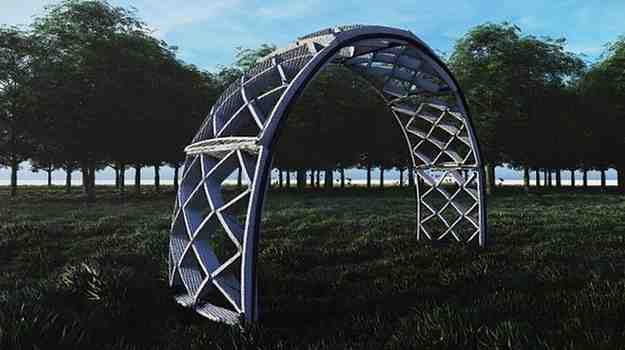
3D Concrete Printing - Free Form Geometries with Improved Ductility and Strength.
Zeeshan Y. Ahmed, Alessia Biffi,, Lauri Hass, Freek P. Bos, Theo A.M. Salet
Eindhoven University of Technology | RILEM Bookseries | 2020
Additive manufacturing (AM) or 3D printing is a rapid prototyping process that has captured the attention of architects and designers worldwide in the last few years. Multiple research groups and commercial entities are exploring different areas of 3D concrete printing (3DCP) with one of the main topics being the potential to improve the design freedom, while simultaneously achieving sufficient structural ductility. Based on the target design impression of a free form 3DCP structure, this study presents a number of 3DCP strategies to print arbitrary double-curved geometries with improved concrete ductility. A digital design-to-fabrication workflow was applied, consisting of defining parameters at various stages of the process. Two case study objects have been printed, both featuring double-curved surfaces achieved through cantilevered printing with support material, and by printing on a curved support surface, respectively. The former object acted as support for the latter. Entrained cables and secondarily added glass fibres were used to obtain ductility. The result is a double-curved 1 × 1 m panel with fibre-reinforced printed concrete, as well as a double curved print bed, reinforced with high strength steel cables.
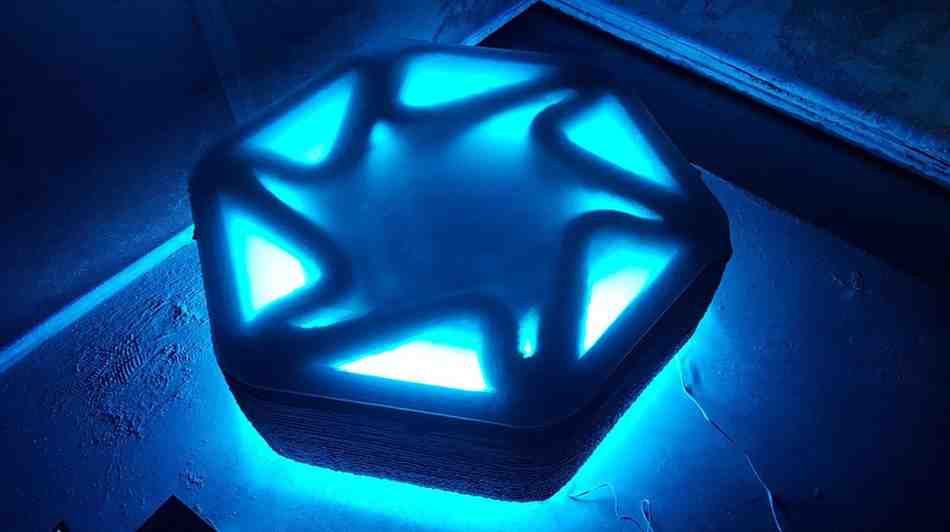
Architectonic Explorations of the Possibilities of 3D Concrete Printing: The Historic Building Fragment as Inspiration for New Applications with 3D Concrete Printing in Architecture.
Juliette D. Bekkering, Zeeshan Y. Ahmed,, Barbara C.I.M. Kuit, Alessia Biffi
Eindhoven University of Technology | RILEM Bookseries | 2020
The scope of this one-year research, carried out within a graduation studio consisting of 16 students, was to explore how this novel technique can lead to the development of new architectural forms. The graduation-studio called ‘De Centrale Gent, with 3D Concrete Printing’ explored the technique of 3DCP within the historical city of Ghent and through researching, designing and testing by printing. Fase 1: We investigated what the application of this technique could mean for architecture itself, taking the historical facades of the city of Ghent as an inspiration for the development of new printing techniques in 3DCP. We focused on developing a design-‘instrumentarium’ that is specific for the concrete printing technique, as well as on techniques that could push the boundaries of the so far known possibilities in shape, materiality’s, and ornamentation with Concrete Printing in relation to architecture. The research aimed to discover new aesthetic and sustainable qualities in 3D-printed manufacturing, through 5 main topics: light, joints, and patterns, supporting material, and assembling. The research was developed at the Eindhoven University of Technology and the prints were made with the 3DCP in the laboratory of the faculty of the Built Environment. Fase 2: Printing prototypes: A selection of results and findings of the one-year research in the graduation studio have been elaborated and collated into a new final product and summary design for three columns, featuring new aesthetic possibilities in 3DCP.
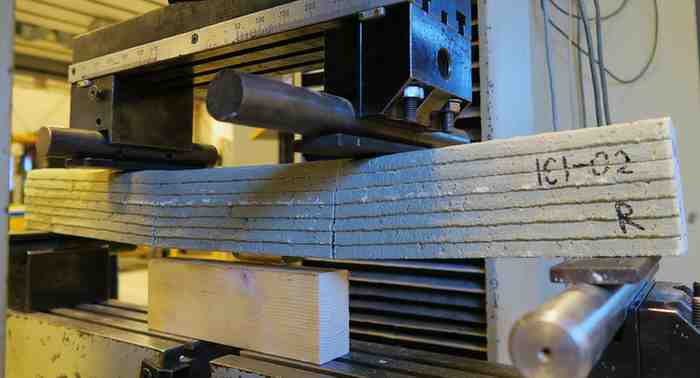
Bond of Reinforcement Cable in 3D Printed Concrete.
Freek P. Bos, Steven Dezaire,, Zeeshan Y. Ahmed, Anne Hoekstra, Theo A.M. Salet
Eindhoven University of Technology | RILEM Bookseries | 2020
The use of high strength steel cables directly entrained into printed concrete during the printing process, has previously been introduced as a method to provide reinforcement to objects being manufactured through a layer-extrusion based 3D concrete printing process. The bond between the cable and the cementitious mortar is a crucial parameter for the structural performance of such reinforcement, and was hence subject of a detailed study presented in this paper. The bond performance was studied in direct and flexural pull-out tests on cast and printed specimens and further analysed by microscopic analysis of the bond surface. Two effects were identified that significantly decrease the bond strength. Firstly, chemical reactions create a spongy interface of poor strength. Secondly, the flow of mortar around the cable tends to create a cavity underneath the cable which reduces the effective bond surface. Mortar viscosity, nozzle design and filament pressure, were thus identified as important parameters for the bond quality. The average bond quality seems to reduce with embedment length. As a consequence, cable breakage was not achieved, in spite of considerable embedment lengths that were tested. Likely, this was caused by the cumulative probability of critical defects along the increasing embedment length, in combination with a non-constant shear distribution. All test series showed significant scatter. It was concluded that, although this reinforcement method is promising as it can potentially provide sufficient post-cracking strength, the bond quality must be improved considerably both in terms of average strength and reduction of scatter.
Mechanical behaviour of Printed Strain Hardening Cementitious Composites.
Stefan Chaves Figueiredo, Claudia Romero Rodríguez,, Zeeshan Y. Ahmed, Derk H. Bos, Yading Xu, Theo A.M. Salet, Oguzhan Çopuroglu, Erik Schlangen,, Freek P. Bos,
Eindhoven University of Technology, Delft University of Technology | Materials | 2020
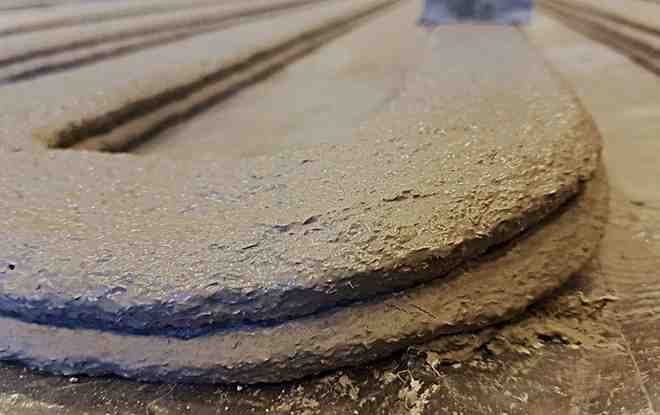
Extrusion based additive manufacturing of cementitious materials has demonstrated strong potential to become widely used in the construction industry. However, the use of this technique in practice is conditioned by a feasible solution to implement reinforcement in such automated process. One of the most successful ductile materials in civil engineering, strain hardening cementitious composites (SHCC) have a high potential to be employed for three-dimensional printing. The match between the tailored brittle matrix and ductility of the fibres enables these composites to develop multiple cracks when loaded under tension. Using previously developed mixtures, this study investigates the physical and mechanical performance of printed SHCC. The anisotropic behaviour of the materials is explored by means of mechanical tests in several directions and micro computed tomography tests. The results demonstrated a composite showing strain hardening behaviour in two directions explained by the fibre orientation found in the printed elements. Moreover, the printing technique used also has guaranteed an enhanced bond in between the printed layers.
On-demand additive manufacturing of functionally graded concrete.
Zeeshan Y. Ahmed, Freek P. Bos,, M.C.A.J. van Brunschot, Theo A.M. Salet
Eindhoven University of Technology | Publication: Taylor and Francis Online | 2020
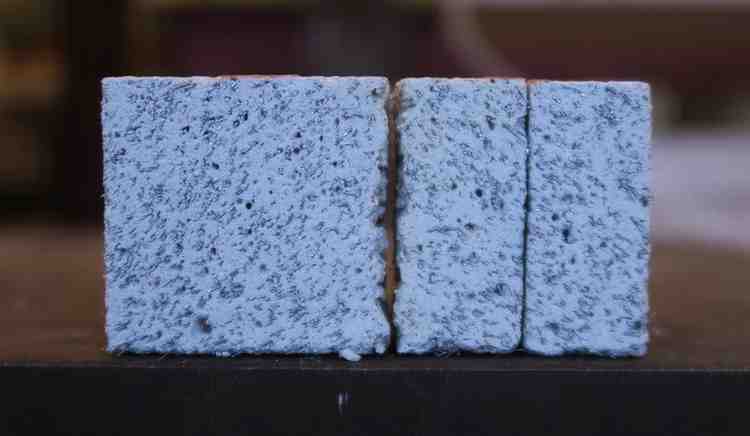
The rapid development of additive manufacturing of cementitious materials has enabled the emergence of a new design paradigm, namely functional grading of material properties by location. Target performance parameters could be material weight and insulation value or (particularly important) ductility. A generic concept to achieve this, is through the selective addition of fibres or aggregates. In 3D concrete printing (3DCP), this concept can be developed into two strategies: by adding particles (i) to the bulk mixture through a second stage mixing process at the printer head (Simultaneous Process, SP), or (ii) in between the layers of deposited cementitious filament (Repetitive Sequential Process, RSP). The present paper presents the development of specific equipment required to obtain on–demand functional grading of the printed material. Subsequently, the application of these systems in print trials is shown. The current study focussed on ductility by creating fibre–reinforced 3D printed concrete through both strategies. The mechanical performance of the obtained material has been established through compressive, flexural, and crack–mouth opening displacement tests. To underline the generic nature of the strategies, a trial with lightweight aggregates has also been performed. It was shown that particularly the SP is capable of achieving improvements in ductility and self–weight.
The influence of material temperature on the in-print strength and stability of a 3D print mortar
Freek P. Bos, Rob Wolfs, Zeeshan Y Ahmed , L.J.Hermens , Theo Salet
Eindhoven University of Technology | Publication: Taylor and Francis Online | 2019
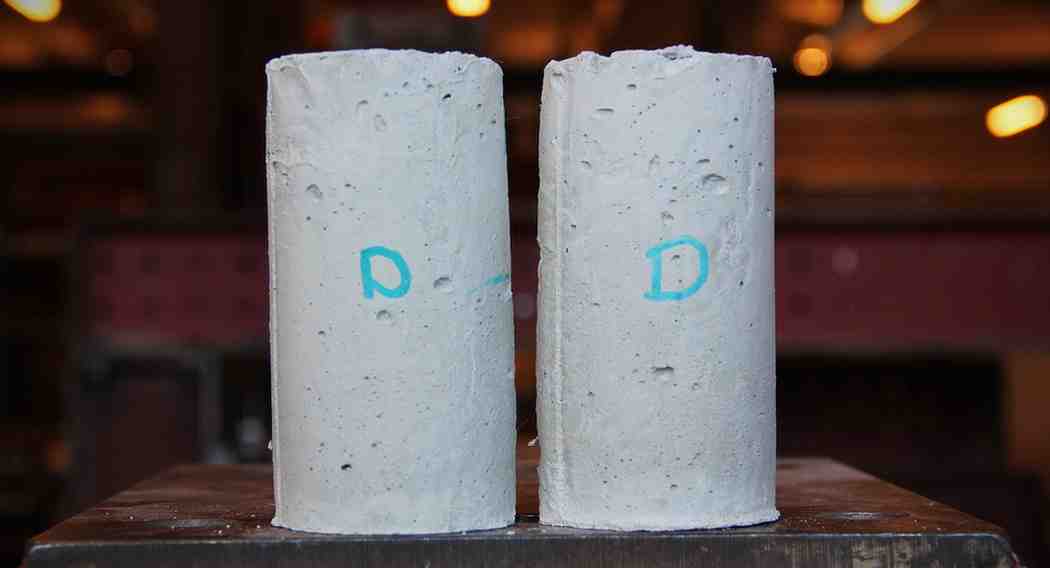
Due to the lack of formwork, a key issue in the novel technology of filament-based 3D concrete printing (3DCP) is the ‘buildability’: the capacity of the deposited dormant material to support itself during the print process. Since the strength and stiffness development of fresh concrete is determined by chemical and physical processes, it may be expected that the temperature of the material that is being printed influences the buildability. This paper presents the results of several experiments that have been performed to study this effect. First, fresh material specimens were cooled or heated to different temperatures and subjected to unconfined uniaxial compression tests at ages of 30, 75 and 200 minutes (relating to material setting time as well as common print durations). A clear effect on both compressive strength and stiffness was noted at an age of 75 minutes. Subsequently, a print trial was performed on a rectangular shape partially heated by heat lamps. The results supported the experiment on material samples: the buildability of the smaller object (with a shorter printing time) was not influenced by externally applied heat, whereas the larger object was. In a third experiment, a print trial was performed on two shapes for which the water was pre-cooled or pre-heated before mixing with the dry mortar. Warm water resulted in higher buildability of the objects, but also in reduced interlayer strength and an increased risk of system overheating, which instigates the need for further research in the relations between temperature and 3DCP
An approach to develop printable strain hardening cementitious composites
Stefan Chaves Figueiredo, Claudia Romero Rodriguez, Zeeshan Ahmed, D.H. Bos, Yading Xu, Theo Salet, Oğuzhan Çopuroğlu, Erik Schlangen, Freek Bos
Eindhoven University of Technology , Delft University of Technology | Materials & Design | 2019
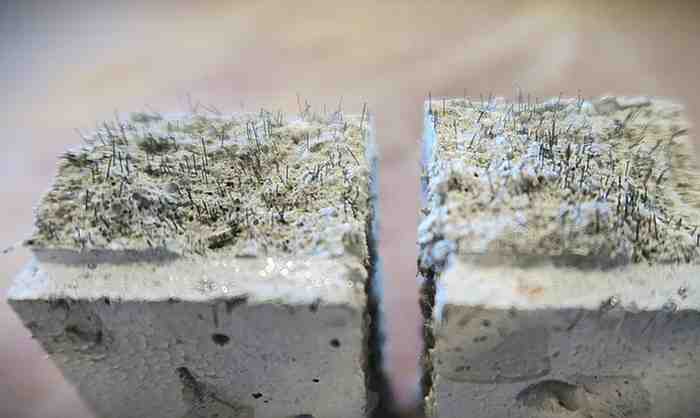
New additive manufacturing methods for cementitious materials hold a high potential to increase automation in the construction industry. However, these methods require new materials to be developed that meet performance requirements related to specific characteristics of the manufacturing process. The appropriate characterization methods of these materials are still a matter of debate. This study proposes a rheology investigation to systematically develop a printable strain hardening cementitious composite mix design. Two known mixtures were employed and the influence of several parameters, such as the water-to-solid ratio, fibre volume percentage and employment of chemical admixtures, were investigated using a ram extruder and Benbow-Bridgwater equation. Through printing trials, rheology parameters as the initial bulk and shear yield stress were correlated with variables commonly employed to assess printing quality of cementitious materials. The rheology properties measured were used to predict the number of layers a developed mixture could support. Selected mixtures had their mechanical performance assessed through four-point bending, uni-axial tensile and compressive strength tests, to confirm strain hardening behaviour was obtained. It was concluded that the presented experimental and theoretical framework are promising tools, as the bulk yield stress seems to predict buildability, while shear yield stress may indicate a threshold for pumpability.
Unprintable Forms
Yota Adilenidou, Zeeshan Ahmed,, Freek Bos, Marjan Colletti
University College London , Eindhoven University of Technology | ACADIA | 2019
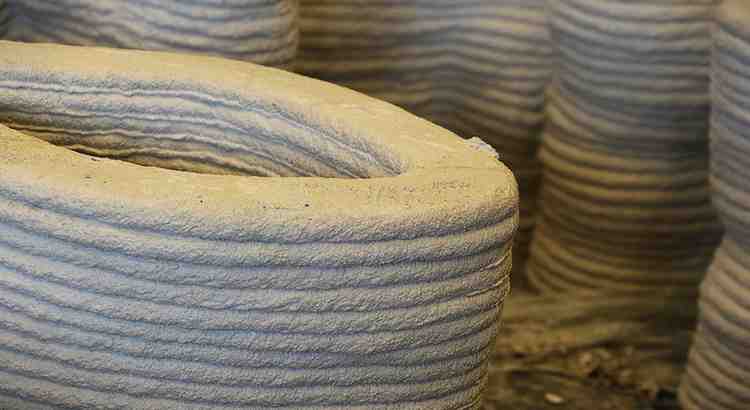
This paper presents a 3D Concrete Printing (3DCP) experiment at the full scale of virtualarchitectural bodies developed through a computational technique based on the use of Cellular Automata (CA). The theoretical concept behind this technique is the decoding of errors in form generation and the invention of a process that would recreate the errors as a response to optimization (Adilenidou 2015). The generative design process established a family of structural and formal elements whose proliferation is guided through sets of differential grids (multi-grids) leading to the build-up of large span structures and edifices, for example, a cathedral. This tooling system is capable of producing, with specific inputs, a large number of outcomes in different scales. However, the resulting virtual surfaces could be considered as 'unprintable' either due to their need of extra support or due to the presence of many cavities in the surface topology. The above characteristics could be categorized as errors, malfunctions, or undesired details in the geometry of a form that would need to be eliminated to prepare it for printing. This research project attempts to transform these 'fabrication imprecisions' through new 3DCP techniques into factors of robustness of the resulting structure. The process includes the elimination of the detail 'errors' of the surface and their later reinsertion as structural folds that would strengthen the assembly. Through this process, the tangible outputs achieved fulfill design and functional requirements without compromising their structural integrity due to the manufacturing constraints.
Large Scale Testing of Digitally Fabricated Concrete (DFC) Elements
Freek Bos, Rob Wolfs,, Zeeshan Ahmed, Theo Salet
Eindhoven University of Technology | RILEM Bookseries | 2018
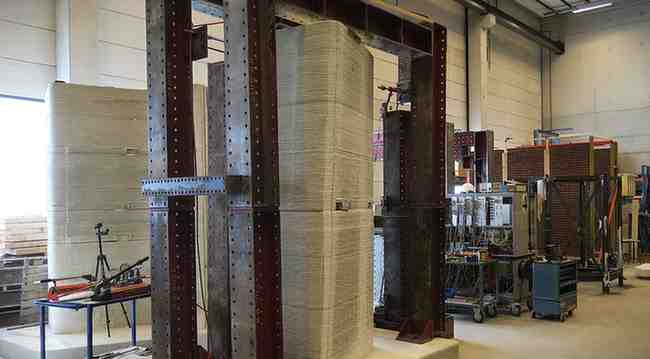
Case study projects based on Digitally Fabricated Concrete (DFC) are presented in an increasing pace around the globe. Generally, though, it is not reported what structural requirements (if any) these structures meet and how compliance to these requirements was established. Published material research is often not connected to the presented case studies, and even when it is, it is not necessarily obvious their small scale results can be applied to full scale structures as some scale effects should be anticipated. Caution is required as DFC related material tests are still under development and scale effects in DFC have hardly been studied. Therefore, it is recommendable to perform large scale testing, in the range of 1:5 to 1:1, if DFC is applied to actual use structures. This paper presents such testing for two projects, a pavilion in Denmark (not realised) and a bridge in the Netherlands (realised). In both cases, elements printed with the 3D Concrete Printing facility of the Eindhoven University of Technology were intended for actual load bearing performance. The conservative designs past the test requirements, but nevertheless some important findings with regard to element manufacturing and structural behaviour were experienced. It is concluded that large scale testing remains advisable for DFC structures as long as not all relevant aspects of the technology are quantitatively understood, at least when new concepts are being applied.
3D Printing Concrete on temporary surfaces: The design and fabrication of a concrete shell structure
Chris Borg Costanzi, Zeeshan Ahmed,, Roel Schipper, Freek Bos, Ulrich Knaack, Rob Wolfs
Eindhoven University of Technology , Delft University of Technology | Automation in Construction | 2018
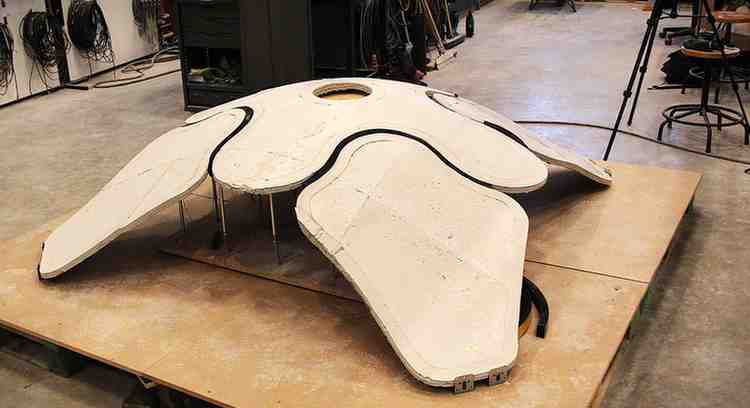
One of the geometrical restrictions associated with printed paste materials such as concrete, is that material must be self-supporting during printing. In this research paper a new methodology for 3D Printing Concrete onto a temporary freeform surface is presented. This is achieved by setting up a workflow for combining a Flexible Mould developed at TU Delft with a 4-degrees-of-freedom gantry printer (4 DOF) provided at TU Eindhoven. A number of hypothetical cases are studied, namely fully-printing geometries or combining 3D printing with casting concrete. The final outcome is a 5 m 2 partially-printed and partially-cast shell structure, combined with a CNC-milled mould simulating a Flexible Mould.
3D concrete printing – a structural engineering perspective
Theo Salet, Freek Bos, Rob Wolfs, Zeeshan Ahmed
Eindhoven University of Technology | High Tech Concrete: where technology and engineering meet | 2018
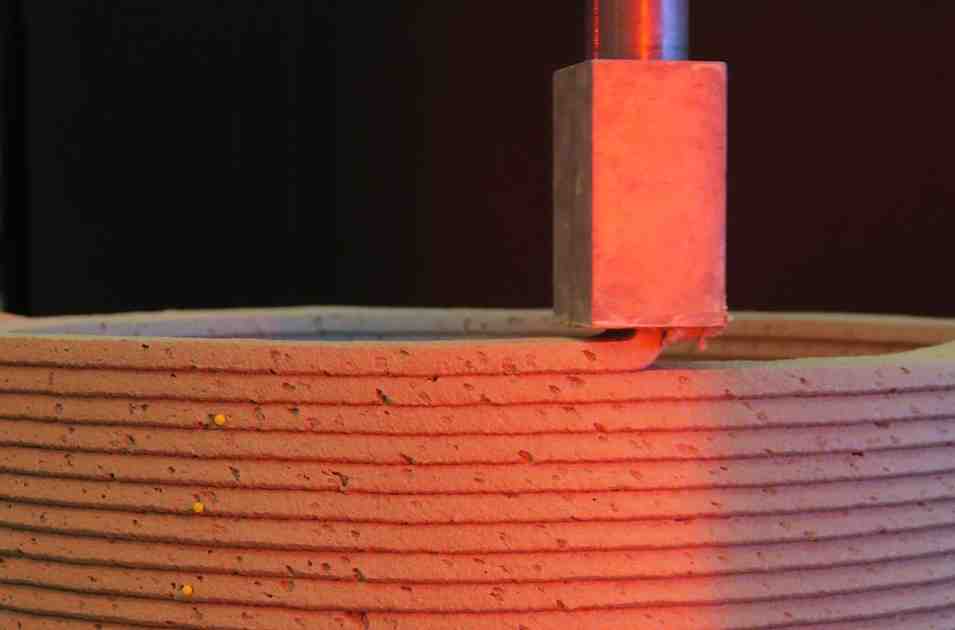
3D Concrete Printing (3DCP) is being developed in an increasing number of places around the globe. The focus is mainly on a trial-and-error based exploration of the possibilities. However, to obtain a viable manufacturing technology and realise the 3DCP potential, a higher level of process control is required. Four levels of control are therefore identified.Research efforts and key results to achieve a higher level of control than the current one are presented. As a final goal, optimization algorithms should beable to define optimum print sessions, based on allowable print strategies and structural analysis models describing both the fresh and hardened concrete state. This will result in new geometries appropriate to this specificmanufacturing technique. These geometries, however, can only be applied when structural safety is achieved, either by loading conditions (compression structures), hybrid solutions (combination with conventional reinforced concrete), embedded reinforcement, FRC and prestress. Such solutions are therefore being explored.
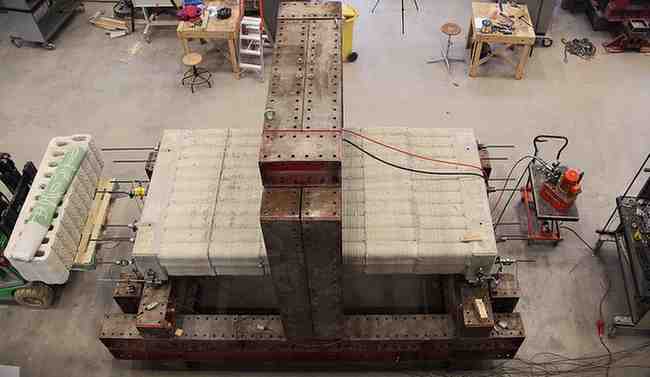
Design of a 3D printed concrete bridge by testing
Theo A. M. Salet, Zeeshan Y. Ahmed, Freek P. Bos, Hans L. M. Laagland
Eindhoven University of Technology | Virtual and Physical Prototyping | 2018
The current state of research and development into the additive manufacturing of concrete is poised to become a disruptive technology in the construction industry. Although many academic and industrial institutions have successfully realised full-scale structures, the limitations in the current codes of practice to evaluate their structural integrity have resulted in most of these structures still not being certified as safe for public utilisation and thus deemed as test prototypes for display purpose only. To realise a 3D concrete printed (3DCP) structure which could be certified safe for public use, a bridge was realised using the print facility of the Eindhoven University of Technology (TU/e) based on the concept of ‘Design by Testing’. This paper holistically discusses the complications encountered while realising a reinforced 3DCP bridge in a public traffic network and decisions taken to find solutions for overcoming them
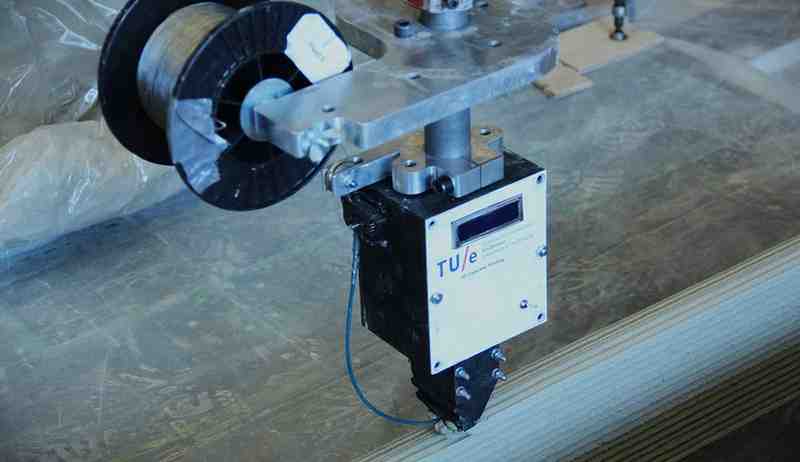
3D Printing Concrete with Reinforcement
Freek Bos, Zeeshan Ahmed, Rob Wolfs, Theo Salet
Eindhoven University of Technology | Publication: ResearchGate | 2018
Recent years have seen a rapid growth of additive manufacturing methods for concrete construction. A recurring issue associated with these methods, however, is the lack of ductility in the resulting product. In cases this is solved by combining printing with conventional casting and reinforcing techniques. Alternatively, this paper presents first findings on the development of a system to directly entrain a suitable form of reinforcement during printing. A device is introduced to apply the reinforcement. Several options for online reinforcement medium are compared for printability and structural performance, based printing test runs and 4-point bending tests respectively. It is shown that high-performance steel cables can provide suitable reinforcement characteristics, although improved bond would allow better use of the cable capabilities. Significant post-cracking deformations and post-cracking strength can be achieved. Further research into optimal reinforcement placement and configuration is recommended.
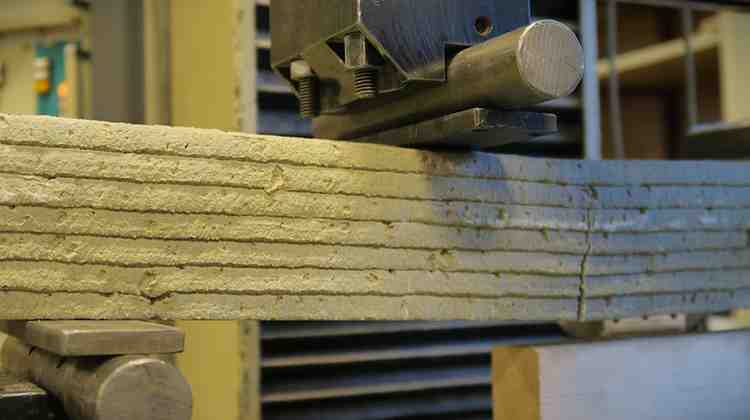
Experimental Exploration of Metal Cable as Reinforcement in 3D Printed Concrete
Theo Salet, Zeeshan Ahmed,, Evgeniy R. Jutinov, Freek Bos
Eindhoven University of Technology | Materials | 2017
The Material Deposition Method (MDM) is enjoying increasing attention as an additive method to create concrete mortar structures characterised by a high degree of form-freedom, a lack of geometrical repetition, and automated construction. Several small-scale structures have been realised around the world, or are under preparation. However, the nature of this construction method is unsuitable for conventional reinforcement methods to achieve ductile failure behaviour. Sometimes, this is solved by combining printing with conventional casting and reinforcing techniques. This study, however, explores an alternative strategy, namely to directly entrain a metal cable in the concrete filament during printing to serve as reinforcement. A device is introduced to apply the reinforcement. Several options for online reinforcement media are compared for printability. Considerations specific to the manufacturing process are discussed. Subsequently, pull-out tests on cast and printed specimens provide an initial characterisation of bond behaviour. Bending tests furthermore show the potential of this reinforcement method. The bond stress of cables in printed concrete was comparable to values reported for smooth rebar but lower than that of the same cables in cast concrete. The scatter in experimental results was high. When sufficient bond length is available, ductile failure behaviour for tension parallel to the filament direction can be achieved, even though cable slip occurs. Further improvements to the process should pave the way to achieve better post-crack resistance, as the concept in itself is feasible.
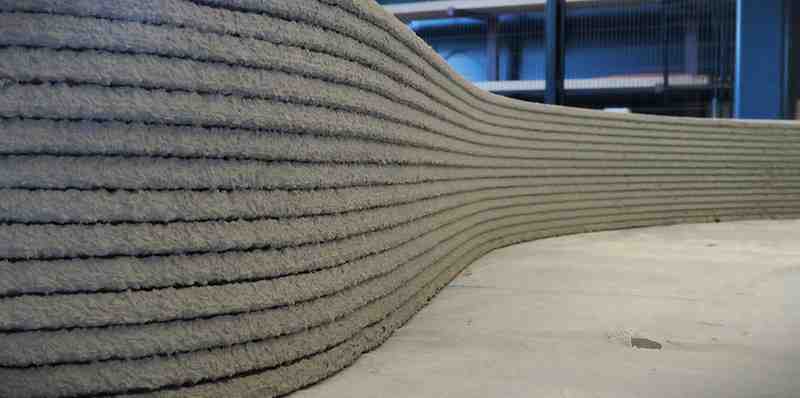
Additive manufacturing of concrete in construction: potentials and challenges of 3D concrete printing
Theo Salet, Freek Bos, Rob Wolfs, Zeeshan Ahmed
Eindhoven University of Technology | Virtual and Physical Prototyping | 2016
Additive manufacturing is gaining ground in the construction industry. The potential to improve on current construction methods is significant. One of such methods being explored currently, both in academia and in construction practice, is the additive manufacturing of concrete (AMoC). Albeit a steadily growing number of researchers and private enterprises active in this field, AMoC is still in its infancy. Different variants in this family of manufacturing methods are being developed and improved continuously. Fundamental scientific understanding of the relations between design, material, process, and product is being explored. The collective body of work in that area is still very limited. After sketching the potential of AMoC for construction, this paper introduces the variants of AMoC under development around the globe and goes on to describe one of these in detail, the 3D Concrete Printing (3DCP) facility of the Eindhoven University of Technology. It is compared to other AMoC methods as well as to 3D printing in general. Subsequently, the paper will address the characteristics of 3DCP product geometry and structure, and discuss issues on parameter relations and experimental research. Finally, it will present the primary obstacles that stand between the potential of 3DCP and large-scale application in practice, and discuss the expected evolution of AMoC in general.
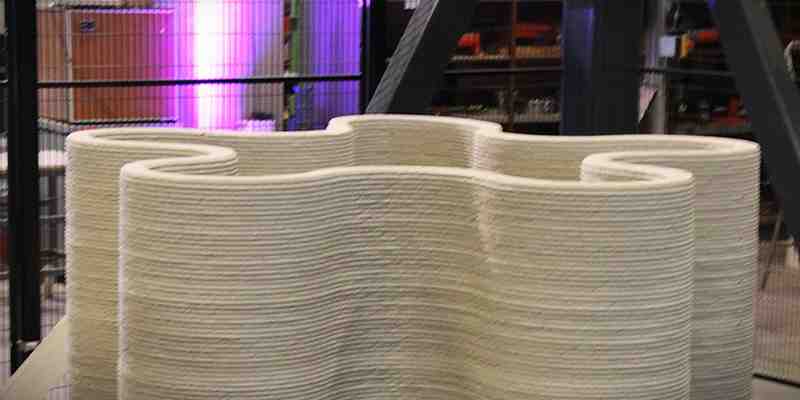
Design considerations due to scale effects in 3D concrete printing
Zeeshan Y. Ahmed, Theo A. M. Salet, Freek P. Bos, Rob Wolfs
Eindhoven University of Technology | ASCAAD | 2016
The effect of scale on different parameters of the 3D printing of concrete is explored through the design and fabrication of a 3D concrete printed pavilion. This study shows a significant gap exists between what can be generated through computer aided design (CAD) and subsequent computer aided manufacturing (generally based on CNC technology). In reality, the 3D concrete printing on the one hand poses manufacturing constraints (e.g. minimum curvature radii) due to material behaviour that is not included in current CAD/CAM software. On the other hand, the process also takes advantage of material behaviour and thus allows the creation of shapes and geometries that, too, can't be modelled and predicted by CAD/CAM software. Particularly in the 3D printing of concrete, there is not a 1:1 relation between toolpath and printed product, as is the case with CNC milling. Material deposition is dependent on system pressure, robot speed, nozzle section, layer stacking, curvature and more-all of which are scale dependent. The paper will discuss the design and manufacturing decisions based on the effects of scale on the structural design, printed and layered geometry, robot kinematics, material behaviour, assembly joints and logistical problems. Finally, by analysing a case study pavilion, it will be explored how 3D concrete printing structures can be extended and multiplied across scales and functional domains ranging from structural to architectural elements, so that we can understand how to address questions of scale in their design.